Daoism Foundations · · 20 min read
Taoists: The Living Keepers of the Way—Sacred Lineages, Temple Liturgy, Inner Alchemy, and Consecrated Implements
Discover who Taoists truly are: explore sacred priestly lineages, daily temple liturgy, Neidan meditation, and consecrated altar implements.
By Daoismart Editorial
On this page
- Taoists: The Living Keepers of the Way—Sacred Lineages, Temple Liturgy, Inner Alchemy, and Consecrated Implements
- 1. Who Are Taoists? Demystifying the Living Masters of the Way
- The Spectrum: Lay Cultivators (Jushi) vs. Ordained Priests (Daoshi)
- 2. The Two Grand Living Lineages: Zhengyi and Quanzhen
- The Zhengyi Tradition: Liturgy, Talismans, and Community Service
- The Quanzhen Tradition: Monastic Stillness and Internal Alchemy
- 3. The Daily Life and Spiritual Discipline of Taoists
- Morning and Evening Liturgies (Chenke and Hunke)
- The Ethic of Restraint: The Five Precepts (Wu Jie 五戒)
- 4. Sacred Vestments and Ritual Implements of Taoists (Fawu 法物)
- The High Priest's Celestial Vestment: Jiangyi (降衣)
- The Lightning-Struck Jujube Wood Seal (Leiji Zaomu Yin)
- 5. Authentic Lineage Implements vs. Commercial Replicas: Connoisseurship Matrix
- 6. Practical Step-by-Step Guide: How Seekers Can Walk the Taoist Path
- Step 1: Canonical Foundation through Scriptural Immersion
- Step 2: Establish a Respectful Home Altar or Contemplative Space
- Step 3: Daily Somatic Practice: Breathwork and Seated Forgetting
- Step 4: Living the Precepts in Daily Society
- Step 5: Seeking Lineage Discipleship and Formal Transmission
- 7. The Living Legacy of Taoists in the Contemporary World
- Frequently Asked Questions (FAQ)
- What is the fundamental difference between a Taoist priest and a lay Taoist?
- Can non-Chinese or Western practitioners become ordained Taoists?
- Do all Taoists remain celibate and live in mountain monasteries?
- How do Taoists use consecrated implements like swords and seals in everyday practice?
Taoists: The Living Keepers of the Way—Sacred Lineages, Temple Liturgy, Inner Alchemy, and Consecrated Implements
Key Takeaways & Core Principles - Direct Definitive Resolution: When exploring who Taoists are, the orthodox understanding is that Taoists (Daoshi 道士, literally "Scholars or Masters of the Way") are ordained practitioners, priests, and devoted cultivators who embody, transmit, and preserve the living spiritual, liturgical, and somatic wisdom of Daoism. - Beyond Stereotypes: Genuine Taoists are neither fictional sorcerers from martial arts fantasy nor detached armchair philosophers. They are disciplined custodians of an unbroken, two-thousand-year spiritual tradition combining metaphysics, internal alchemy (Neidan 内丹), ritual choreography (Keyi 科仪), and deep reverence for nature (Ziran 自然). - Two Grand Lineage Streams: The ordained priesthood is anchored by two complementary orders: the monastic, celibate Quanzhen (全真道, Complete Perfection) tradition centered upon solitary meditation and inner alchemy, and the community-based Zhengyi (正一道, Orthodox Unity) lineage centered upon ritual liturgies (Jiao 醮), talismanic craft (Fu Lu 符箓), and sacred consecration (Kai Guang 开光). - The Sacred Alchemy of Daily Life: The daily routine of Taoists harmonizes the physical vessel and the celestial cosmos through morning and evening liturgical chants (Gongke 功课), diaphragmatic breathwork (Tu Na 吐纳), seated forgetting (Zuowang 坐忘), and strict observance of ethical precepts (Jie 戒). - Empowered Sacred Instruments: Rather than viewing physical reality as profane, Taoists utilize consecrated ritual implements (Fawu 法物)—such as lightning-struck jujube wood master seals (Leiji Zaomu Yin 雷击枣木印), seven-star peachwood swords (Taomu Jian 桃木剑), and pure botanical incenses—as tangible energetic antennas bridging the formless Tao with human consciousness.
1. Who Are Taoists? Demystifying the Living Masters of the Way
Across international literature and contemporary media, few spiritual figures have been surrounded by as much romantic intrigue and misunderstanding as Taoists. In popular cinema and fantasy novels, they are frequently depicted as wandering hermits wielding lightning spells or eccentric alchemists searching for mythical elixirs. Conversely, in Western academic circles, Daoism is often reduced to an abstract literary philosophy derived from reading the Daodejing, divorced from living priests and sacred temples.
In orthodox tradition, however, Taoists (Daoshi 道士) are the ordained heart of a living world religion and contemplative science. The term Daoshi first appeared during the Han and Wei dynasties, denoting those who "possess the Way and practice its virtue" (You Dao Zhi Shi 有道之士). Rather than passive observers of nature, Taoists are active cultivators who harmonize their physical, energetic, and spiritual bodies with the celestial rhythms of Heaven and Earth (Tian Ren He Yi 天人合一).
The Spectrum: Lay Cultivators (Jushi) vs. Ordained Priests (Daoshi)
It is essential to distinguish between everyday adherents and consecrated clergy. A lay practitioner is recognized as a Jushi (居士). They may hold demanding professions in business, art, or technology while integrating Taoist mindfulness, dietary wisdom, and home altar veneration into their lives.
By contrast, Taoists who hold the title of Daoshi have formally entered a lineage through traditional master-disciple rites (Bai Shi 拜师). They have spent years studying liturgical chanting, sacred calligraphy, traditional Chinese medicine, stellar astrology, and meditative internal cultivation under certified lineage elders. To become a Daoshi is not an intellectual hobby; it is a solemn lifelong vocation dedicated to serving humanity and maintaining the spiritual equilibrium between the visible world and the invisible celestial order.
2. The Two Grand Living Lineages: Zhengyi and Quanzhen
All authentic Taoists belong to recognized ancestral lineages. In modern times, the global Taoist community is primarily guided by two major orthodox traditions: the liturgical Zhengyi (正一道, Orthodox Unity) lineage and the monastic Quanzhen (全真道, Complete Perfection) lineage.
The Zhengyi Tradition: Liturgy, Talismans, and Community Service
The Zhengyi order traces its origins directly to the first year of the Eastern Han Dynasty (142 CE), when Celestial Master Zhang Daoling (张道陵) received divine revelation on Mount Heming (鹤鸣山). Headquartered at the majestic Dragon and Tiger Mountain (Longhu Shan 龙虎山) in Jiangxi, Zhengyi priests are primarily Huoju Daoshi (火居道士)—meaning "fire-dwelling priests" who reside among secular households rather than within enclosed monastic walls.
Zhengyi Taoists marry, maintain families, and pass their sacred craft down through lineage registers (Lu 箓). Their sacred ministry is intimately woven into the communal tapestry:
- Liturgical Rites (Jiao 醮): Conducting elaborate communal thanksgiving festivals, spatial balancing ceremonies, and prayers for peace and weather harmony.
- Talismanic Science (Fu Lu 符箓): Transcribing consecrated cinnabar scrolls to dispel negative spiritual resonance, clear domestic disharmony, and protect individuals from harm.
- Solemn Consecration (Kai Guang 开光): Bestowing spiritual vitality upon deity statues, peachwood swords, and master seals for temples and personal home sanctuaries.
The Quanzhen Tradition: Monastic Stillness and Internal Alchemy
Founded in the 12th century by Grandmaster Wang Chongyang (王重阳) and consolidated by his seven renowned disciples (the Seven Immortals of the North, including Qiu Chuji of the Dragon Gate branch), the Quanzhen tradition is a monastic, contemplative order.
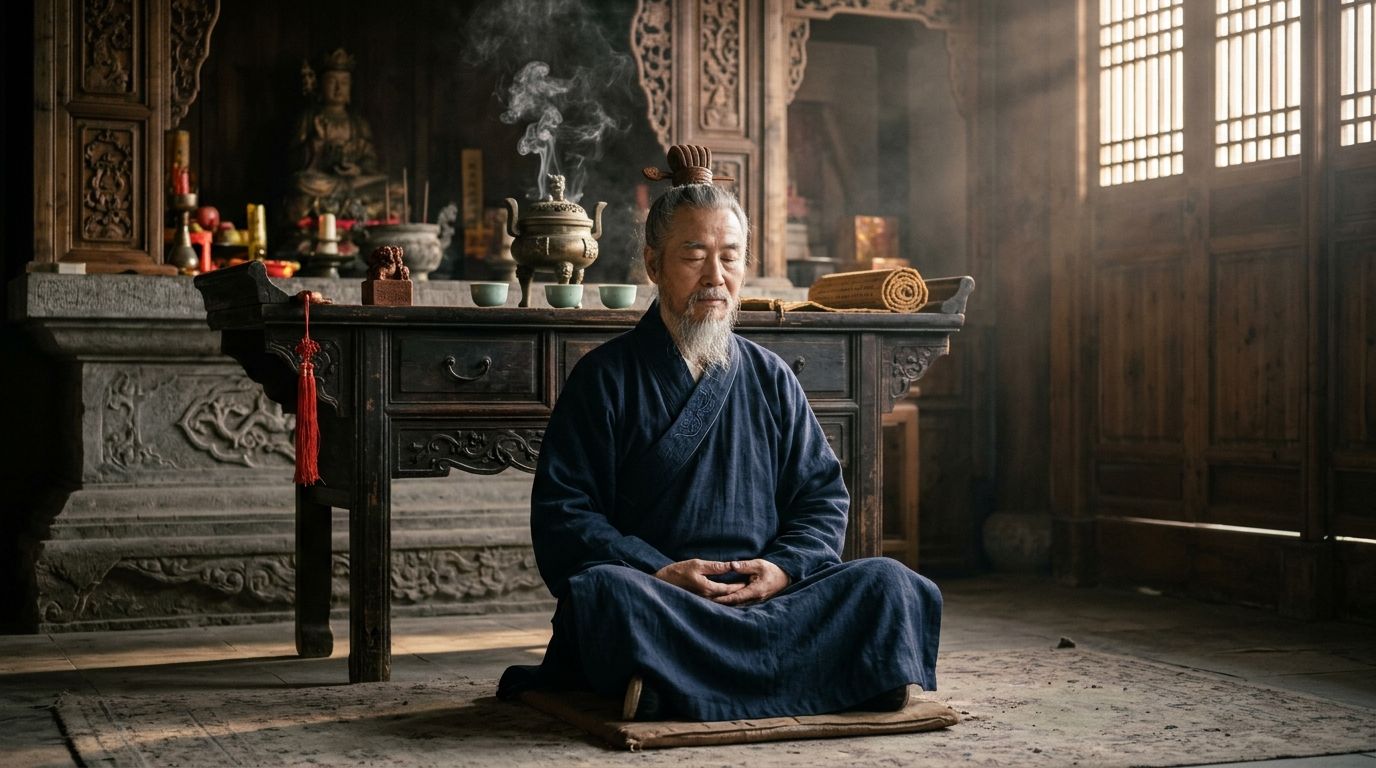
Quanzhen Taoists are Chujia Daoshi (出家道士)—men and women who leave secular domestic life, take strict vows of celibacy, adopt pure vegetarianism, and reside in mountain monasteries such as the historic White Cloud Temple (Baiyun Guan 白云观) in Beijing or the sacred crags of the Wudang Mountains (武当山). Quanzhen priests wear their hair in a traditional topknot pinned with a wooden or jade hair clasp, symbolizing their commitment to preserving natural vital essence.
The heart of Quanzhen practice is Internal Alchemy (Neidan 内丹). Rather than relying heavily on external ritual ceremonies, Quanzhen Taoists treat their own body, breath, and mind as an alchemical crucible, transforming base physiological essence into radiant spiritual immortality.
3. The Daily Life and Spiritual Discipline of Taoists
Far from idyllic days spent gazing idly at mountain clouds, the daily life of ordained Taoists is structured by rigorous discipline, communal labor, scriptural recitation, and somatic cultivation. The spiritual day follows the cosmic movement of the sun, aligning human vitality with the celestial clock.
Morning and Evening Liturgies (Chenke and Hunke)
At the core of daily temple devotion are the Chen Hun Gongke (晨昏功课)—the Morning and Evening Liturgical Lessons. Before dawn, as the first Yang energy begins to stir across the horizon, priests assemble in the Grand Hall before the statues of the Three Pure Ones (Sanqing 三清).
During the Morning Liturgy (Chenke), Taoists chant foundational canonical scriptures, including:
- Taishang Laojun Shuo Chang Qingjing Jing (太上老君说常清静经): The Scripture of Constant Purity and Tranquility, which calms sensory desires and attunes the mind to the stillness of the Tao.
- Zhuetian Zan (诸天赞): Hymns of praise to the celestial realms and planetary spirits.
- Chants invoking spiritual clarity, wishing peace upon all living beings across the nine realms.
At twilight, as Yin energy descends, the Evening Liturgy (Hunke) shifts toward prayers of gratitude, transmuting worldly burdens, and dedicating spiritual merit to departed ancestors in the underworld.
The Ethic of Restraint: The Five Precepts (Wu Jie 五戒)
Contrary to the Western myth that Daoist "spontaneity" (Ziran) implies total hedonistic license, authentic Taoists operate under strict moral restraint. To enter a lineage, one must receive and uphold the Five Fundamental Precepts (Wu Jie 五戒):
- No Killing (Bu Sha 不杀): Upholding deep reverence for all sentient life and natural ecosystems.
- No Stealing (Bu Dao 不盗): Respecting the property of others and cultivating profound contentment with simple means.
- No Sexual Misconduct (Bu Yin 不淫): Preserving vital sexual essence (Jing 气); absolute celibacy for Quanzhen monastics, and mutual marital fidelity for Zhengyi priests.
- No Dishonest Speech (Bu Wangyu 不妄语): Speaking only truth, harmony, and wisdom, avoiding gossip and deceptive rhetoric.
- No Intoxicants (Bu Jiurou 不酒肉): Refraining from excessive alcohol and substances that cloud the clear mirror of spiritual awareness.
4. Sacred Vestments and Ritual Implements of Taoists (Fawu 法物)
In living Daoism, physical matter is viewed as condensed Qi (Qi ju wei wu 炁聚为物). Therefore, the vestments worn and the implements wielded by Taoists are not ornamental badges; they are consecrated instruments engineered to focus intention, command elemental energies, and preserve spiritual integrity.
The High Priest's Celestial Vestment: Jiangyi (降衣)
During grand liturgical ceremonies (Jiao), the presiding High Priest (Gaogong Daoshi 高功道士) wears the magnificent Jiangyi (降衣, "Robe of Descending Grace"). Shaped as a vast square when unfolded, the garment represents the ancient cosmological principle of "Round Heaven and Square Earth" (Tian Yuan Di Fang 天圆地方).
Embroidered upon the back of the Jiangyi are the cosmic realms:
- The central golden palace of the Jade Emperor surrounded by the Three Pure Ones.
- The golden Sun disc on the left shoulder and the silver Moon disc on the right shoulder.
- The Twenty-Eight Lunar Mansions (Ershiba Xiu 二十八宿) and the sacred symbols of the Five Sacred Mountains (Wuyue 五岳).
When wearing the Jiangyi, the High Priest steps into the altar as a living microcosm of the entire universe, bridging the celestial realms with human supplicants.
The Lightning-Struck Jujube Wood Seal (Leiji Zaomu Yin)
Among the most prized personal implements carried by ordained Taoists is the Leiji Zaomu Yin (雷击枣木印). In Taoist esoteric science, lightning is the purest kinetic manifestation of Heaven's Yang fire (Leiting Yangqi 雷霆阳炁). When a wild jujube tree growing high in the mountains survives a natural lightning strike, its dense wood absorbs this concentrated celestial charge.
Priests carve sacred talismanic scripts into this wood—such as the Seal of the Celestial Master (Tianshi Yin) or the Dao Jing Shi Bao Yin (Treasure Seal of the Dao, Scriptures, and Masters). The seal acts as an energetic signature: when stamped in natural red cinnabar ink upon talismans or documents, it validates celestial decrees and establishes spiritual safety.
5. Authentic Lineage Implements vs. Commercial Replicas: Connoisseurship Matrix
For international scholars, practitioners, and collectors seeking genuine spiritual tools, distinguishing authentic lineage implements from mass-produced commercial souvenirs is paramount. Authentic implements are created with specific sacred materials and artisanal integrity, while modern industrial copies lack energetic viability and can introduce harmful chemical vibrations into a contemplative sanctuary.
The comparison table below provides rigorous diagnostic markers for evaluating primary sacred tools used by Taoists:
- Taoist Robes & Vestments (Daopao & Jiangyi 道袍) — Authentic Lineage Implements (正统开光法物): Tailored from 100% natural breathable linen, unbleached cotton, or pure wild silk; hand-embroidered with traditional silk thread using exact canonical iconography; comfortable drape that facilitates Qi circulation. · Commercial Tourist Imitations (工业仿制品): Mass machine-produced from 100% petrochemical polyester or synthetic nylon; screen-printed or cheap nylon-threaded designs; traps body heat, generates static electricity, and restricts breath. · Diagnostic Verification & Energetic Impact: Somatic Resonance: Natural fibers allow the practitioner's skin and pores to breathe naturally during hours of seated meditation; synthetic garments create skin irritation and agitated Qi.
- Lightning Jujube Wood Seals (Leiji Zaomu Yin 雷击枣木印) — Authentic Lineage Implements (正统开光法物): Sourced from wild mountain jujube naturally struck by lightning; natural electrical scorching and grain fissures visible; dense, heavy, and sinks in water; emits a toasted nutty fragrance when rubbed. · Commercial Tourist Imitations (工业仿制品): Rapid-growth orchard fruitwood or basswood artificially scorched with laser cutters or gas blowtorches; lightweight, floats on water; emits an acrid smell of burnt timber and chemical varnish. · Diagnostic Verification & Energetic Impact: Celestial Yang Fire: Authentic lightning wood carries the profound energetic imprint of thunder fire, clearing domestic dampness and nightmares; artificial wood is energetically inert.
- Seven Stars Peachwood Swords (Taomu Jian 桃木剑) — Authentic Lineage Implements (正统开光法物): Hand-carved from seasoned heartwood of wild mountain peach trees aged over 30 years; warm amber-red hue with tight rings; hand-inlaid with solid brass Big Dipper stars; feels balanced and solid. · Commercial Tourist Imitations (工业仿制品): Cheap pine, composite MDF board, or chemically dyed basswood; stars are stamped yellow foil stickers or painted dots; feels featherweight and brittle with synthetic red enamel spray. · Diagnostic Verification & Energetic Impact: Solar Yang Purity: Wild peachwood naturally repels stagnant domestic Qi and fosters harmonious Feng Shui; cheap glued composites emit toxic formaldehyde that disrupts meditation.
- Sacred Cinnabar Talismans (Fu Lu 符箓) — Authentic Lineage Implements (正统开光法物): Hand-written by an initiated priest while holding meditative breath; drawn on handmade mulberry or bamboo paper using pure ground natural mineral cinnabar (Zhusha 朱砂) suspended in spring water. · Commercial Tourist Imitations (工业仿制品): Machine-printed by high-speed offset lithography on glossy bleached chemical paper; printed with toxic orange-red petrochemical ink; mass-reproduced in thousands with zero intention. · Diagnostic Verification & Energetic Impact: Mineral Vibrational Charge: Natural cinnabar is a dense, light-reflective mineral that holds stable electromagnetic charge; commercial printer ink is entirely devoid of energetic frequency.
- Altar Censers & Incense (Xiangdao & Xianglu 香炉) — Authentic Lineage Implements (正统开光法物): Hand-cast solid brass or patinated Song-style bronze censer; filled with natural plant ash; burns 100% pure wild Hainan Jiangzhen incense resin or aged natural sandalwood without binders. · Commercial Tourist Imitations (工业仿制品): Thin zinc alloy or pot metal coated with cheap chemical bronze paint; burns charcoal sticks soaked in synthetic chemical perfume oils and chemical combustible accelerants. · Diagnostic Verification & Energetic Impact: Respiratory & Spiritual Clarity: Pure botanical incense cleanses the olfactory channels, calms the vagus nerve, and invites serene focus; synthetic smoke causes headaches and soot buildup.
6. Practical Step-by-Step Guide: How Seekers Can Walk the Taoist Path
Many sincere international seekers wonder how they can respectfully connect with the wisdom of Taoists and cultivate the Way in their own lives without cultural appropriation or confusion. True Taoist cultivation does not require moving instantly to a mountain cave; it begins with grounding one's daily life in mindfulness, ethical clarity, and sacred balance.
Follow this five-step authentic path to integrate Taoist wisdom into your modern routine:
Step 1: Canonical Foundation through Scriptural Immersion
Begin by studying orthodox translations of foundational texts rather than superficial new-age interpretations. Read the Daodejing (Dao De Jing 《道德经》) by Laozi, the parables of the Zhuangzi (《庄子》), and the meditative manual Qingjing Jing (《清静经》). Focus on understanding core cosmological principles: the complementary balance of Yin and Yang (阴阳), the rhythm of Wu Wei (无为, non-coercive action), and living in alignment with Ziran (自然, spontaneous nature).
Step 2: Establish a Respectful Home Altar or Contemplative Space
Create a physical anchor for your cultivation at home. Dedicate a clean, stable surface in your study or living area, preferably facing East or South:
- Place an authentic, consecrated statue of Taishang Laojun (Laozi) or a hand-written calligraphy scroll of the character DAO (道).
- Arrange three celadon or porcelain cups filled with fresh spring water, symbolizing the purification of body, speech, and mind.
- Position a bronze censer filled with clean ash, ready for pure natural incense.
- Ensure the sanctuary remains immaculately clean, quiet, and free from clutter.
Step 3: Daily Somatic Practice: Breathwork and Seated Forgetting
Every morning or evening, spend 15 to 20 minutes in focused somatic practice:
- Breath Cultivation (Tu Na 吐纳): Sit with an upright spine. Place your awareness in the Lower Dantian (下丹田) two inches below your navel. Inhale slowly through your nose, expanding the lower abdomen; exhale smoothly, releasing mental static.
- Seated Forgetting (Zuowang 坐忘): Release attachments to past regrets and future anxieties. Drop your social identities and merge your personal breath into the boundless rhythmic breath of the cosmos.
Step 4: Living the Precepts in Daily Society
Cultivate the Way through your practical actions. Emulate the virtues of water (Shang Shan Ruo Shui 上善若水): yield rather than clash, speak truth without arrogance, preserve emotional tranquility in the midst of professional stress, and treat all living things with compassion. True Taoists prove their cultivation not through esoteric speech, but through kindness, humility, and calm presence in everyday life.
Step 5: Seeking Lineage Discipleship and Formal Transmission
If your inner calling deepens, seek out an authentic master-disciple relationship (Bai Shi 拜师). Visit recognized Taoist associations, ancestral temples, or accredited lineage teachers abroad. Through formal discipleship, a student receives oral instructions (Koujue 口诀), personal energetic guidance, and formal transmission (Chuan Du 传度 in Zhengyi, or Guanjin 冠巾 in Quanzhen), transitioning from an informal seeker into a recognized lineage practitioner.
7. The Living Legacy of Taoists in the Contemporary World
In our high-speed, hyper-digitalized 21st century, the ancient wisdom preserved by Taoists is more essential than ever. Amid widespread ecological alienation, chronic nervous exhaustion, and social polarization, the Taoist model of holistic existence offers a restorative path toward psychological equilibrium and planetary harmony.
Taoists remind us that human beings are not conquerors of nature, but integral threads within its vast fabric. By honoring the living body as a sacred alchemical temple, cultivating mental serenity through stillness, and respecting the sacred energy embedded within natural materials, we rediscover our true place between Heaven and Earth—living effortlessly, peacefully, and perpetually aligned with the eternal Tao.
Frequently Asked Questions (FAQ)
What is the fundamental difference between a Taoist priest and a lay Taoist?
An ordained Taoist priest (Daoshi 道士) has completed years of traditional lineage training, received formal transmission (Chuan Du 传度 or Guanjin 冠巾), and holds ecclesiastical authority to conduct temple liturgies (Jiao), empower talismans (Fu Lu), and perform consecrations (Kai Guang). A lay Taoist (Jushi 居士) is a devoted practitioner who studies Taoist philosophy, practices daily meditation and breathwork, and follows moral precepts while living and working in secular society without formal priestly responsibilities.
Can non-Chinese or Western practitioners become ordained Taoists?
Yes, absolutely. The cosmic Tao is universal and belongs to all humanity regardless of ethnic or cultural background. Recognized Taoist lineages—including the Zhengyi school at Mount Longhu and the Quanzhen Dragon Gate lineage—have formally ordained international practitioners who demonstrate sincere dedication, moral character, and rigorous study of scriptures, liturgical language, and internal alchemy.
Do all Taoists remain celibate and live in mountain monasteries?
No. Only ordained priests of the Quanzhen (Complete Perfection 全真道) lineage take monastic vows of lifelong celibacy, adopt strict vegetarianism, and reside inside temples. In contrast, priests of the Zhengyi (Orthodox Unity 正一道) order live as household priests (Huoju Daoshi 火居道士). They marry, raise families, live among community members, and pass down ritual registers across generations while actively serving local communities.
How do Taoists use consecrated implements like swords and seals in everyday practice?
In Taoist sacred science, consecrated implements (Fawu 法物)—such as lightning-struck jujube wood seals (Leiji Zaomu Yin) and seven-star peachwood swords (Taomu Jian)—are not weapons or talismans of superstition. They are precision energetic anchors. When activated through authentic Kai Guang consecration, their natural molecular properties and solar Yang frequencies help dispel spatial stagnancy, protect domestic sanctuaries, and focus the cultivator's intention during meditation and daily prayer.